
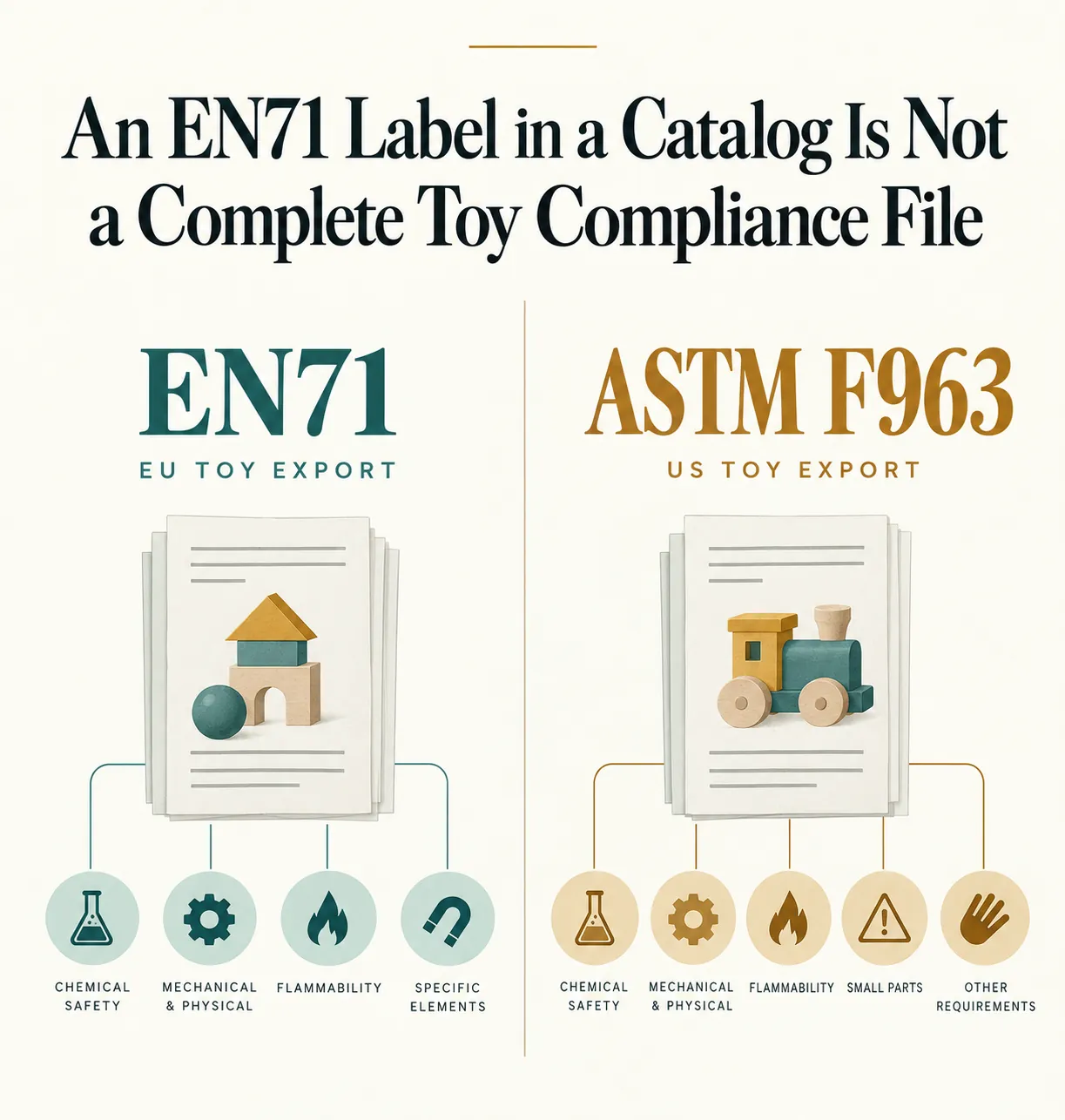
Catalog metadata, thumbnail labels, and promotional text referencing standards like EN71 or ASTM F963 indicate general compliance intentions or standard manufacturing practices, but they do not constitute a complete, order-specific compliance file. For volume importers and retail buyers, relying on a digital catalog listing without obtaining batch-specific test reports or a valid Children's Product Certificate (CPC) exposes supply chains to regulatory holds and customs delays. Official market guidance from regulatory bodies establishes that safety certifications must map directly to the specific production run, materials, and designated age grade of the actual goods delivered.
When sourcing toys in volume, professional buyers must distinguish between marketing metadata and legally required documentation. A supplier listing general testing claims online requires secondary verification through formal laboratory test results and traceability markings before commercial distribution occurs.
What is the Difference Between Catalog Metadata and Order-Specific Documentation?
Digital product listings and wholesale catalogs often feature icons, text badges, or shorthand references to safety standards. These entries serve as top-level product summaries designed to communicate general material types or intended markets. However, catalog entries are promotional metadata rather than verified legal instruments.
In contrast, a complete compliance file consists of verifiable records that link physical production batches to recognized testing standards. Under regulatory frameworks such as those overseen by the U.S. Consumer Product Safety Commission (CPSC), mandatory requirements like CPSC Toy Safety Business Guidance dictate that manufacturers and importers must issue documentation verifying that children's products meet applicable standards CPSC Toy Safety Business Guidance. Catalog text cannot replace this requirement, as it lacks batch traceability, component-level chemical test data, and verifiable laboratory credentials.
How to Verify Actual Sale Units and Order Specifications
Procuring volume inventory requires looking past broad catalog claims to examine the actual sale unit, recorded packaging specifications, and item-specific confirmation limits. Wholesale listings frequently display general tier pricing and minimum order quantities (MOQs) — such as EXW pricing structures Squishy Toy Bulk Catalog — but these commercial terms do not verify compliance status.
Buyers must request explicit confirmation of packaging dimensions, carton distribution, and tracking label implementation. Because standards and successor requirements can be tied directly to the date of manufacture pursuant to statutory rules CPSC Toy Safety Business Guidance, procurement teams should establish clear documentation checkpoints prior to finalizing purchase orders.
Catalog Metadata Versus Compliance Verification Requirements
| Catalog Element | Compliance File Requirement |
|---|---|
| Listing Badges & Text Icons | Third-party laboratory test reports covering exact materials and components |
| General Age Recommendations | Design verification matching primary intended user age and safety scope |
| EXW Tier Pricing & MOQ | Batch-specific Children's Product Certificate (CPC) or regional equivalent |
| Promotional Photos & Renders | Permanent tracking labels and physical packaging compliance features |
Frequently Asked Questions on Toy Compliance and Catalog Claims
Does a supplier's catalog mention of EN71 or ASTM F963 exempt my company from testing?
No. Importers and distributors bear legal responsibility for ensuring commercialized children's products meet applicable standards. Catalog references are promotional and do not replace formal certification documents.
Where should a buyer look to confirm official U.S. toy safety requirements?
Official guidance and regulatory updates are published directly through federal resources such as the [[link:https://www.cpsc.gov/Business--Manufacturing/Business-Education/Toy-Safety|CPSC Toy Safety Business Guidance]] portal.
What documentation must accompany a shipment of children's products?
Importers must be able to furnish required compliance certificates upon request to customs authorities or regulatory agencies, supported by valid test reports from recognized testing laboratories.