
Squishy Toy Bulk Buying Desk · Updated 14 October 2026
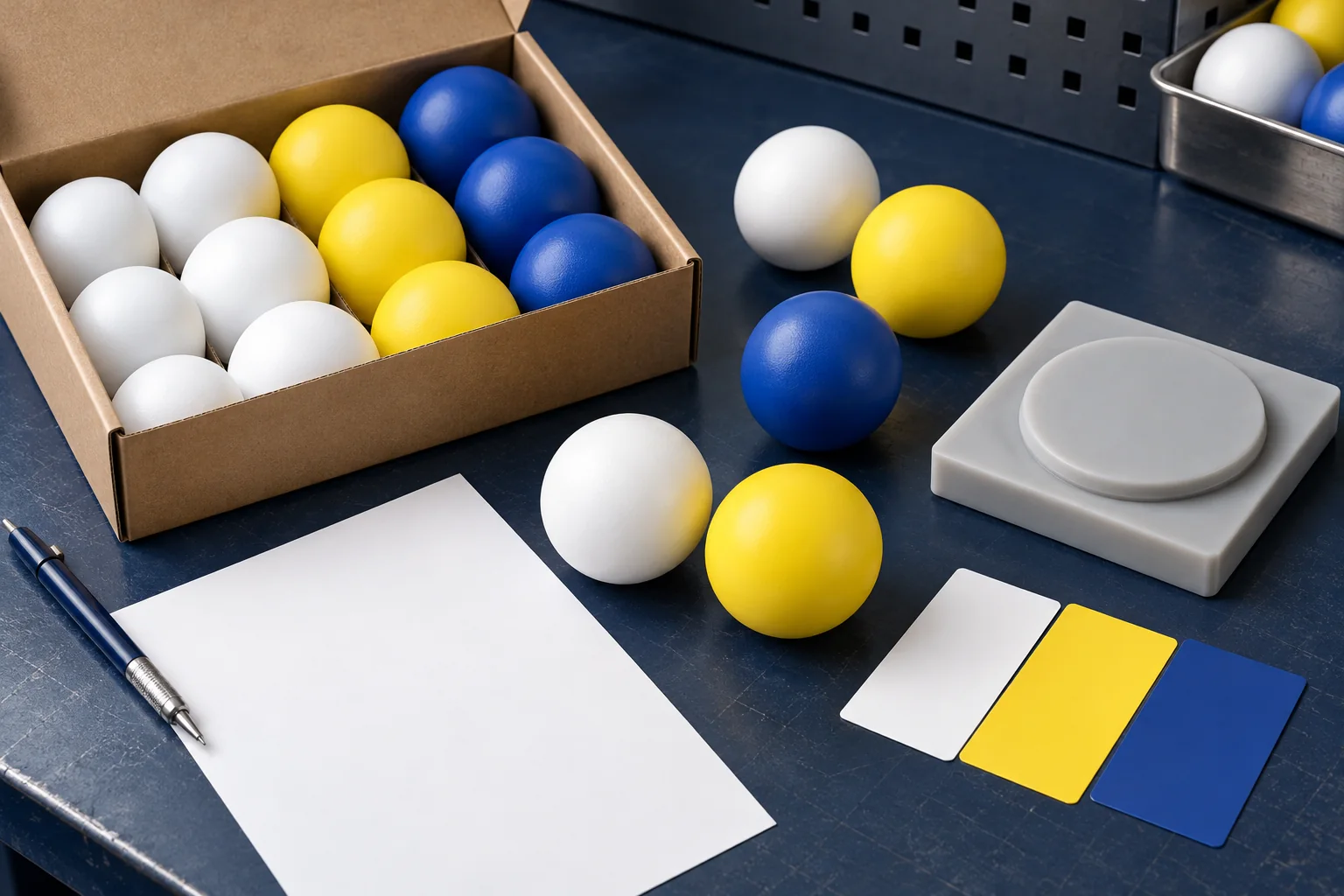
Choose the item before choosing the print process. A smooth ball, a textured squeeze figure and a translucent filled cube offer different surfaces. The useful question is which method can reproduce your artwork on the selected product, at the volume and quality level you need.
Prepare a brief at actual print size
Send the artwork with a proposed logo width, location and orientation. Identify spot-color references, any white areas and details that must stay readable. Mark seams, raised textures and moving parts on a sample photograph. The supplier can then define the usable area and propose a process.
Compare three decoration routes
| Route | Buying question | Approval focus |
|---|---|---|
| Pad print | Can the selected surface take the intended spot-color mark? | Coverage, registration, edges and handling durability |
| Full-color decoration | Which process produces the multicolor result on this item? | Fine detail, white base, curvature and surface behavior |
| Printed sleeve, card or box | Does packaging-only branding meet the campaign goal? | Dieline, pack fit, copy and visible branding after unpacking |
Full color is not a single manufacturing method. Ask the supplier to identify the actual process, compatible substrate and practical print boundary. Do not assume a successful print on one squeeze material will transfer unchanged to another.
Request the right artwork template
An item template should show the approved print area, orientation and excluded edges. A packaging template should match the measured pack and agreed dieline. Keep the artwork scale intact and confirm bleed or safe-area requirements with the printer. Generic downloads are useful for briefing, but the final template must match the ordered item.
Put setup charges beside the unit price
Record the number of artwork versions, colors and positions. Ask which changes require new setup or a new sample. For example, 20,000 units split between four artworks should be quoted as four allocations, even when the blank product is identical. Compare the total cost and the per-version minimum together.
Approve a physical result
Review the artwork at arm's length and close up, on the actual product color. Agree on checks for placement, legibility, color appearance and normal squeeze or rub handling. Retain the accepted sample and artwork revision. If the substrate, ink or print process changes, ask whether approval must be repeated.
When packaging carries the message
A sleeve or insert can hold longer copy and detailed graphics when the toy offers little print area. Include that pack in the freight comparison. If the campaign requires a logo to remain after unboxing, packaging alone may not meet the brief; decide that before production.
In Chenghai, pad-print plates, full-color decoration and color-box production are coordinated inside the same manufacturing cluster, backed by a desk with more than 20 years of export experience. Use the custom stress-ball brief to submit a PDF, PNG or JPEG. Editable production artwork can follow once the item and printable area are agreed. No universal print compatibility is implied by a catalog listing.
Frequently asked questions
Does full color mean one specific printing process?
No. Full color describes the visual result; the actual process and compatible substrate must be identified for the selected item, which is why a packed sample is approved first.
Why choose pad print?
Pad print is economical and durable for one or a few spot colors on curved or textured surfaces, with per-version setup charges and clear registration checks.
Can a logo wrap around a seam or moving part?
Print boundaries avoid seams, raised textures and moving joints. Mark those features on a sample photo so the usable area and logo width are realistic.
When is printed packaging a better choice?
When the item offers too little print area or the campaign needs long copy and detailed graphics, a sleeve, card or box can carry the branding; include it in the freight comparison.